
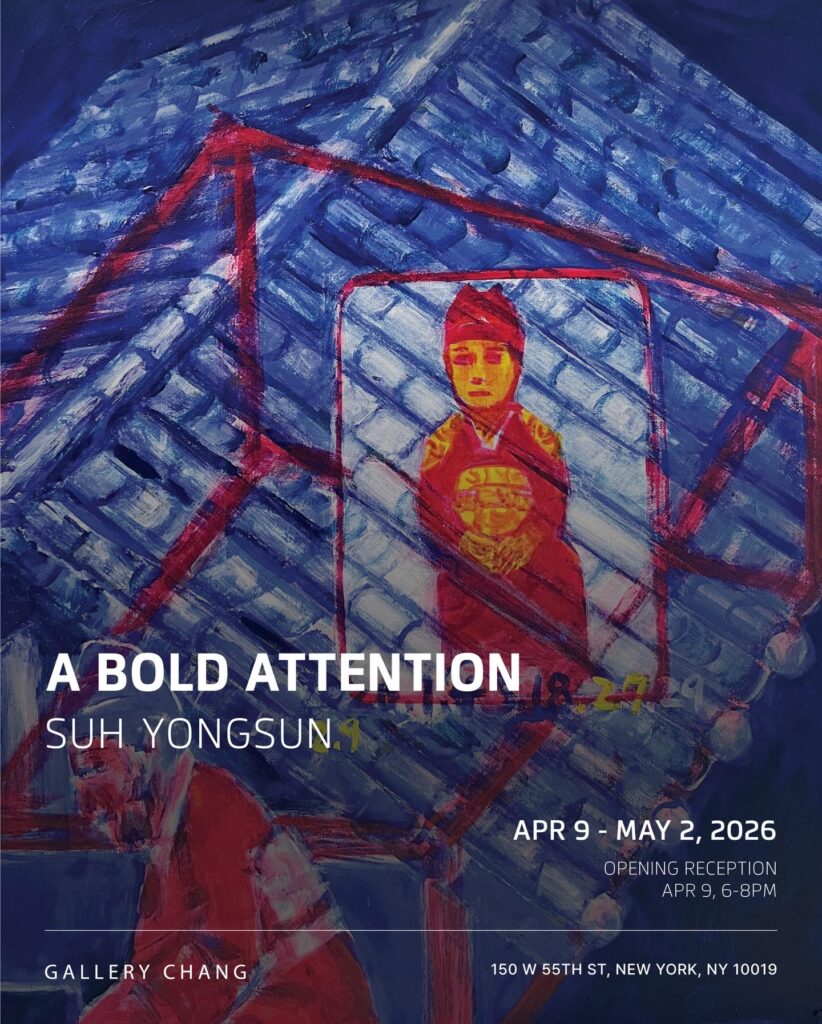
<대담한 관심>
우리는 얼마나 의식적으로 세계를 바라보고 있는가. 서용선 작가는 그러한 질문에서 출발해, 스스로를 점검하며 세계를 직시하려는 태도를 작업을 통해 지속해 왔다.
그의 작업은 역사, 도시, 자화상 등 다양한 형식을 아우르지만, 그 중심에는 언제나 ‘사람’이 있다. 대구항쟁의 격동 속에서도, 미들타운의 도시 풍경 속에서도, 그리고 단종이라는 역사적 인물의 초상 속에서도, 그는 끊임없이 인간의 존재를 응시한다. 그가 그리는 것은 사건이나 배경이 아니라, 그 안을 살아낸 사람들의 얼굴과 흔적이다.
그들은 어떤 시간을 통과해 왔는가. 그 순간, 그들의 표정과 몸짓은 무엇을 말하고 있는가. 작가는 이러한 질문을 회화로 환기시키고, 관객은 그 시선을 따라 다시 생각하게 된다. 화면 속 인물들은 때로는 우리를 응시하고, 때로는 우리로 하여금 그들의 시간을 상상하게 만든다. 우리는 그들을 보고 있는 동시에, 그들에 의해 다시 바라보이고 있는지도 모른다. 이 상호적인 시선 속에서 회화는 하나의 경험이 된다.
특히 추상이 지배적인 동시대 미술의 흐름 속에서, 서용선이 오랜 시간 인물화를 고수해왔다는 점은 더욱 주목할 만하다. 이는 단순한 형식의 선택이 아니라, 인간에 대한 지속적인 관심과 태도의 표현이다. 이미지가 넘쳐나는 시대 속에서 우리는 수많은 장면을 빠르게 소비하지만, 그 안의 인간을 깊이 바라보는 일에는 점점 익숙하지 않다. 이러한 흐름 속에서 서용선의 작업은 오히려 역행하는 듯 보인다. 그는 여전히 사람을 그리며, 그들의 얼굴과 존재를 집요하게 응시한다.
그가 그려온 단종의 얼굴, 대구항쟁 속 인물들의 긴장된 존재, 그리고 도시를 살아가는 사람들의 일상적인 모습은 모두 하나의 질문으로 수렴된다. 우리는 서로를 얼마나 깊이 바라보고 있는가. 이 질문은 단순한 감상을 넘어 동시대를 향한 하나의 제안이기도 하다. 끊임없이 교체되는 상황 속에서, 우리는 과연 타인의 존재를 얼마나 진지하게 마주하고 있는지 돌아보게 된다.
수십 년에 걸쳐 이어져 온 그의 작업은 인간을 향한 지속적인 집중과 선택의 결과이다. 변화하는 흐름 속에서도 흔들리지 않고 끝까지 사람을 바라보려는 태도. 그의 회화는 결국 인간에 대한 한결같은 시선이며, 그 시선을 멈추지 않으려는 의지이다.
곧 ‘대담한 관심’의 기록이라 할 수 있을 것이다.
<A Bold Attention>
How consciously do we look at the world around us?
Suh Yongsun begins from this very question, sustaining a practice grounded in self-reflection and a persistent effort to confront reality with clarity. While his work spans history painting, urban scenes, and self-portraiture, at its core lies a consistent focus: the human figure. Whether in the turbulence of the Autumn Uprising of 1946, the everyday landscapes of his Middletown residency, or the historical presence of King Danjong, Suh continuously directs his gaze toward human existence. What he renders is not merely an event or a setting, but the faces and traces of those who have lived through them.
What passage of time have they endured?
What do their gestures and expressions reveal in a given moment?
Through painting, the artist brings these questions into view, inviting the viewer to follow his gaze and reflect in turn. At times, the figures on canvas seem to look back at us. At others, they compel us to imagine the weight of their lived time. In this reciprocal exchange of gazes, painting becomes not just an image, but an experience.
In an era where abstraction dominates much of contemporary art, Suh’s long-standing commitment to figuration becomes particularly significant. This is not simply a stylistic decision, but a sustained expression of attention toward human presence. In a time when images circulate endlessly and are consumed at speed, we grow less accustomed to truly seeing the people within them. Against this backdrop, Suh’s work appears to move counter to the prevailing current. He continues to paint people, persistently and deliberately, holding their presence in view. The face of King Danjong, the charged figures within the Autumn Uprising of 1946, and the quiet, everyday lives unfolding in the city all converge into a single question.
How deeply do we truly see one another?
This question extends beyond contemplation. It becomes a proposition for our present moment. Within a visual landscape in constant flux, we are prompted to reconsider how fully we encounter the presence of others.
Spanning decades, Suh’s practice reflects a sustained commitment. It is an act of attention, chosen and maintained over time. Amid shifting artistic trends, he has remained unwavering in his insistence on looking, returning again and again to the human figure. His paintings ultimately embody a consistent gaze toward humanity, and a refusal to turn away from it.
It is, in essence, a record of a bold attention.
—
2026. 4. 9 – 5. 2
Gallery Chang, 150 W 55TH ST, New York